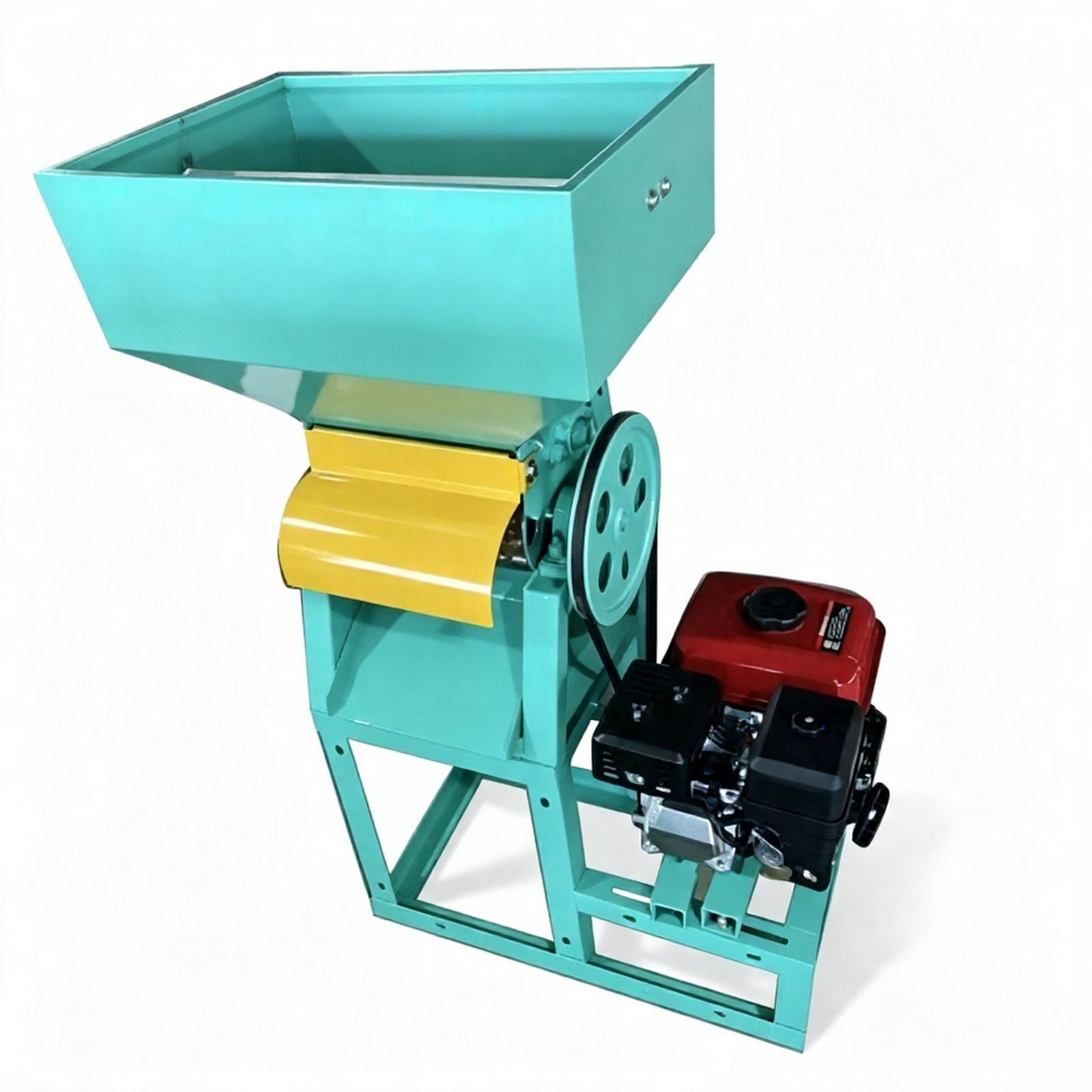
Description
The Nansheng coffee fruit peeling machine removes the outer skin and pulp from freshly picked coffee cherries, preparing the beans for fermentation and drying. The pulping gap is adjustable, so the same machine can be set for different cherry sizes and for a gentler or cleaner pulping action. The frame is carbon steel and the machine is built for small and medium coffee processing.
Technical specifications of the coffee fruit peeling machine
| Machine type | Coffee cherry pulper / fruit peeling machine |
|---|---|
| Application | Removing outer skin and pulp from fresh coffee cherries |
| Pulping gap | Adjustable |
| Body material | Carbon steel |
What the coffee fruit peeling machine handles
- Freshly harvested coffee cherries, before fermentation and drying
- Coffee farms and small washing stations
- Different cherry sizes, because the pulping gap is adjustable
Key features
- Removes outer skin and pulp in one pass
- Adjustable pulping gap for different cherry sizes
- Carbon steel frame, simple and robust
- Low maintenance design for farm-scale use
- Pairs with fermentation tanks and raised drying beds
What decides the output of a coffee pulper
An hourly rating is a figure for one configuration under one set of conditions. What a pulper actually delivers on your site depends on factors you can measure and adjust.
| Cherry size and variety | Larger fruit needs a wider gap and moves through at a different rate; a setting that suits one variety can clip parchment on another |
|---|---|
| Ripeness of the fruit | Ripe cherry releases skin and pulp cleanly, while under-ripe fruit holds on to the parchment and slows the pass |
| Pulping gap setting | A tighter gap pulps more cleanly but runs slower and raises the risk of damage; a wider gap is faster but leaves more mucilage for fermentation to remove |
| Feed rate and water flow | Even feeding, and enough water to carry the pulp away, affect throughput more than the drive rating does |
| Working hours per day | Daily tonnage is hourly output multiplied by the hours you can realistically run, which is why a longer harvest day is often cheaper than a larger machine |
Sizing therefore starts from the peak picking day: take the weight of cherry that arrives on your busiest day, divide it by the hours you can run, and treat the result as the intake rate the pulper has to hold. Every stage behind it — fermentation tank capacity, washing, drying area — then has to be able to absorb what the pulper produces.
Specifications we confirm in writing before production
A specification is only meaningful for a configuration, so we publish the parameters that do not change with configuration — machine type, application, the adjustable pulping gap and the carbon-steel body — and confirm the rest in writing once we know your situation:
- Model and rated output in kg per hour for the configuration you order
- Motor power, and the voltage and phase the machine is built for, matched to your site
- Overall dimensions, and net and gross weight
- Packing volume, so you can work out freight and container loading before you commit
- Spare parts supplied with the machine, and what the warranty covers and excludes
Send your daily cherry volume, the hours you can run the machine and your site’s power supply, and the confirmation comes back against your numbers rather than a generic catalogue line. The same information is what a quotation should contain, as set out in what a nut processing machine quotation should contain, and where the money goes in a full mill is covered in what drives the cost of a coffee processing line.
Frequently asked questions about the coffee fruit peeling machine
What does a coffee fruit peeling machine do?
It removes the outer skin and pulp from freshly picked coffee cherries so the beans can go on to fermentation and drying. This step is also called pulping, and it is the first processing stage after harvest.
Why does the pulping gap need to be adjustable?
Cherry size and ripeness vary between varieties, altitudes and harvest weeks. An adjustable gap lets you set the machine so the skin and pulp are removed cleanly without clipping the parchment or damaging the bean.
How do I choose the right size of coffee pulper?
The right size depends on your daily cherry volume and how many hours you can run the machine each day. Send us your daily harvest in kilograms and your power supply and we will confirm the model and quote it.
What should I send with a quotation request?
Tell us your daily cherry volume, whether you want a manual or motor-driven machine, your power supply, and your destination port. Email nanshengtechnology@gmail.com or message +86 133 7302 3075 on WhatsApp.
Do you also supply the drying and hulling equipment that comes after pulping?
Yes. Nansheng Technology supplies fruit and nut peelers, shell crackers, macadamia opening machines and pine nut threshers, and we can advise on the machines that follow pulping in a coffee line. Ask us for a full line recommendation.
Can the pulping gap be set for different coffee varieties?
Yes, and that is the reason the gap is adjustable rather than fixed at the factory. Cherry size and ripeness differ between varieties, altitudes and even between weeks of the same harvest, and a setting that suits one lot can clip parchment or leave pulp on the next. Expect to re-set the gap whenever the fruit changes, and to check the first few kilograms after each change.
Is a single-phase supply enough to run a coffee pulper?
It depends on the output you need and on your supply. Farm-scale machines are commonly driven from a 220 V single-phase supply, while higher-output configurations are normally built with a 380 V three-phase drive for continuous duty through a harvest day. Tell us what you have, and whether it is stable, because the drive is specified against your supply rather than chosen from a catalogue.
Request a quote or ask a question
Tell us what you need and our sales team will come back with price, packing size, shipping options and lead time, usually within one business day.
- Email: nanshengtechnology@gmail.com
- Phone / WhatsApp: +86 133 7302 3075
To get an accurate quotation, please tell us:
- The material you process (macadamia, cashew, pine nut, coffee cherry, other nuts)
- Your target output per hour or per day
- Your power supply: 220 V single phase or 380 V three phase
- Your destination port or country
Minimum order quantity is one unit. OEM branding and customisation are available on request, and specifications are confirmed in writing before production. Dongguan Nansheng Technology Co., Ltd., Dongguan, Guangdong, China.
Related machines
- All coffee fruit peeling machines
- Macadamia Green Husk Peeler – Small (NS-X121)
- Coffee pulping: settings and damage control
- Coffee processing: complete guide from cherry to green bean
- coffee drying and hulling, from wet parchment to green bean
- what drives the cost of a coffee processing line
- the difference between a coffee pulper and a coffee huller
Related reading
- Nut and coffee processing guides and knowledge base
- Coffee fruit peeling: how pulping sets up everything after it
- What drives the price of a macadamia processing line, and why two quotes differ
Getting a quote for the coffee fruit peeling machine
We quote from your numbers rather than from a list price. Three details decide the answer for the coffee fruit peeling machine: the throughput you need in kg/h, the power supply available on site, and the material you are processing. With those we confirm the model, the lead time and the shipping volume, and we say plainly if a different machine in the range fits better. Send the three details through the contact form, and see what to include in a quotation request if you want the enquiry to be answered in one round instead of three.
Reviews
There are no reviews yet.