Macadamia Green Husk Peelers
Green husk peelers remove the wet outer husk from macadamia nuts after harvest. This step matters more than most growers expect: husk left on the nut in a heap keeps respiring, heats up, and pushes moisture back through the shell into the kernel. The working rule is to dehusk within 24 hours of harvest and never beyond 48 — after that, kernel damage at cracking rises and your whole-kernel rate falls.
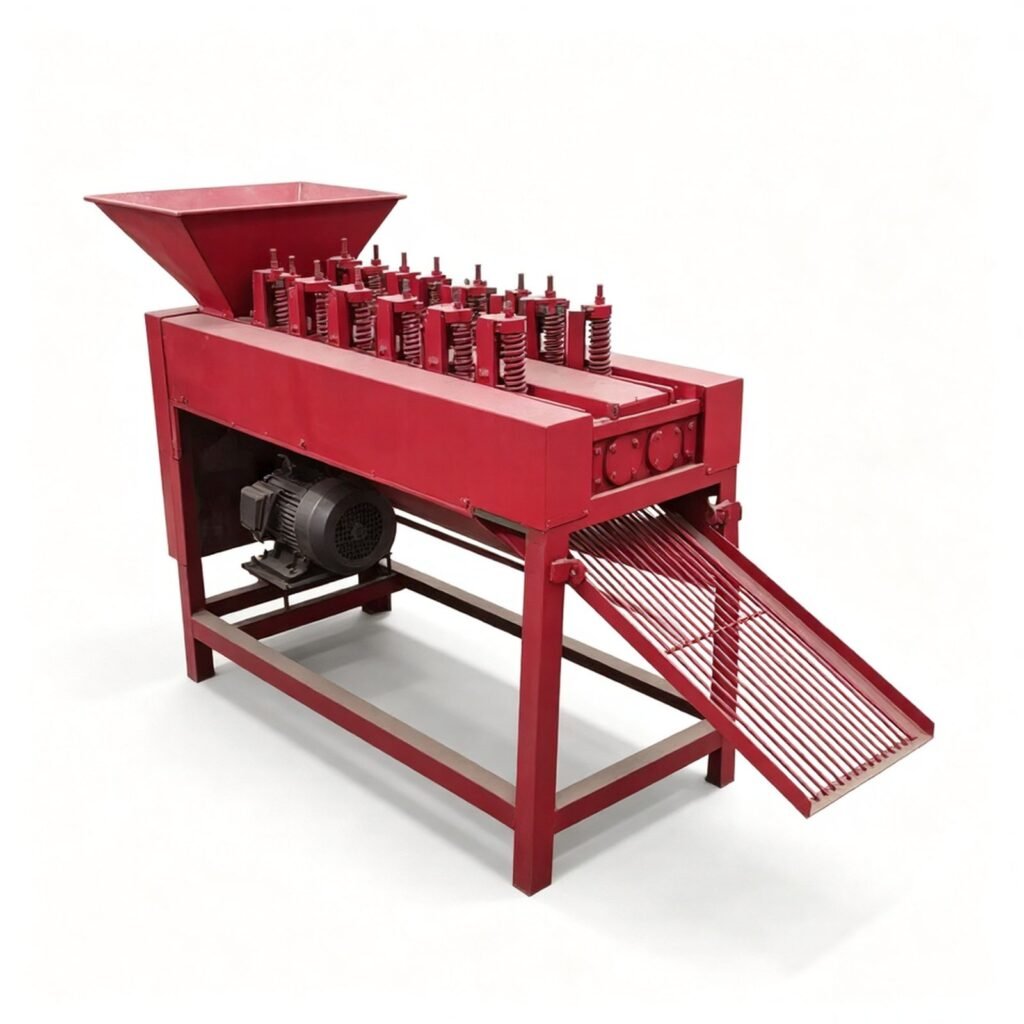
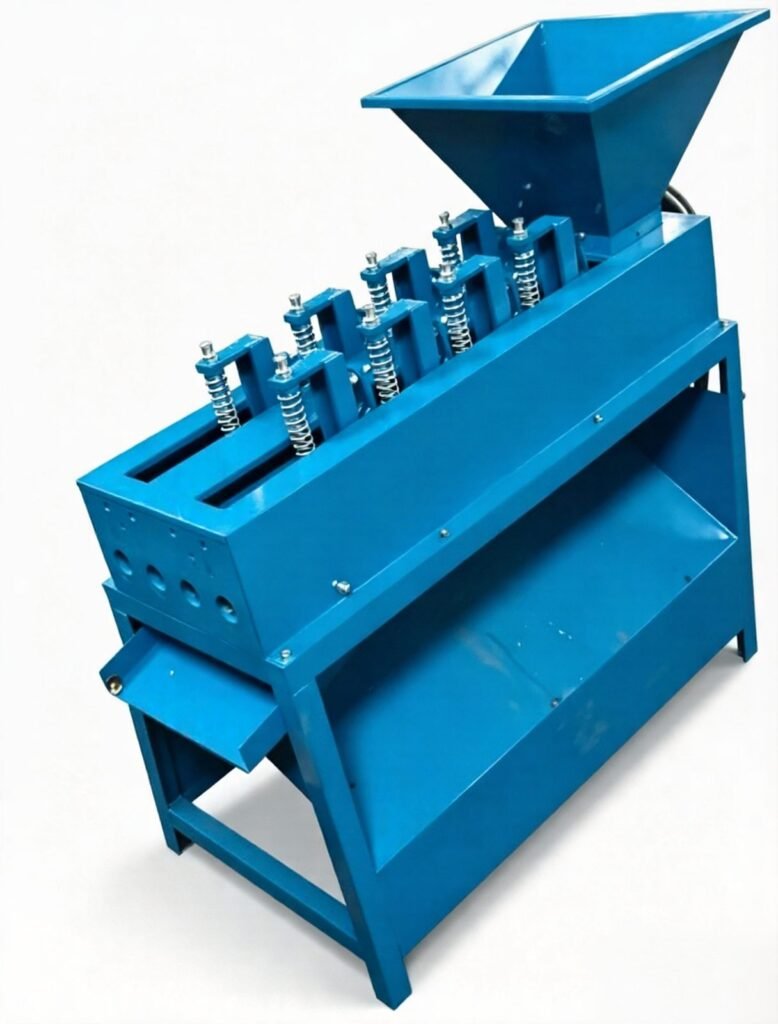
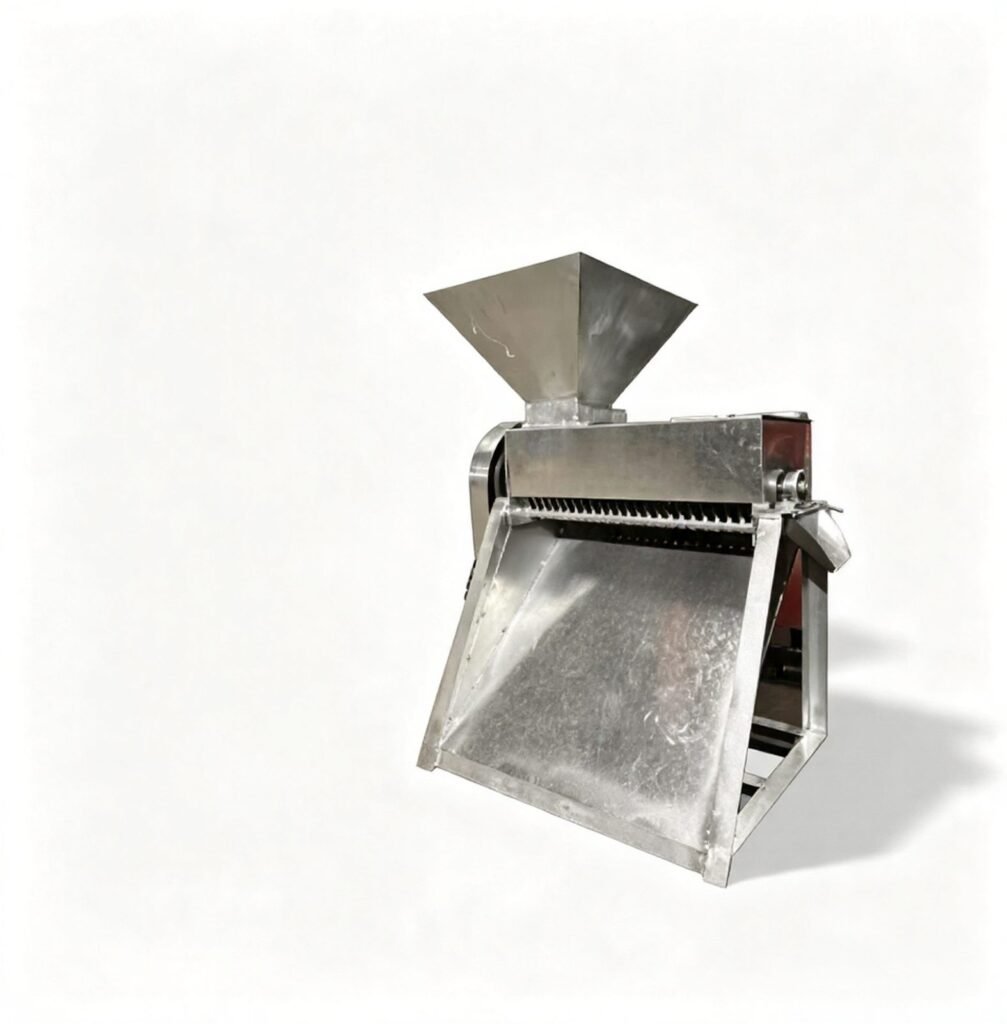
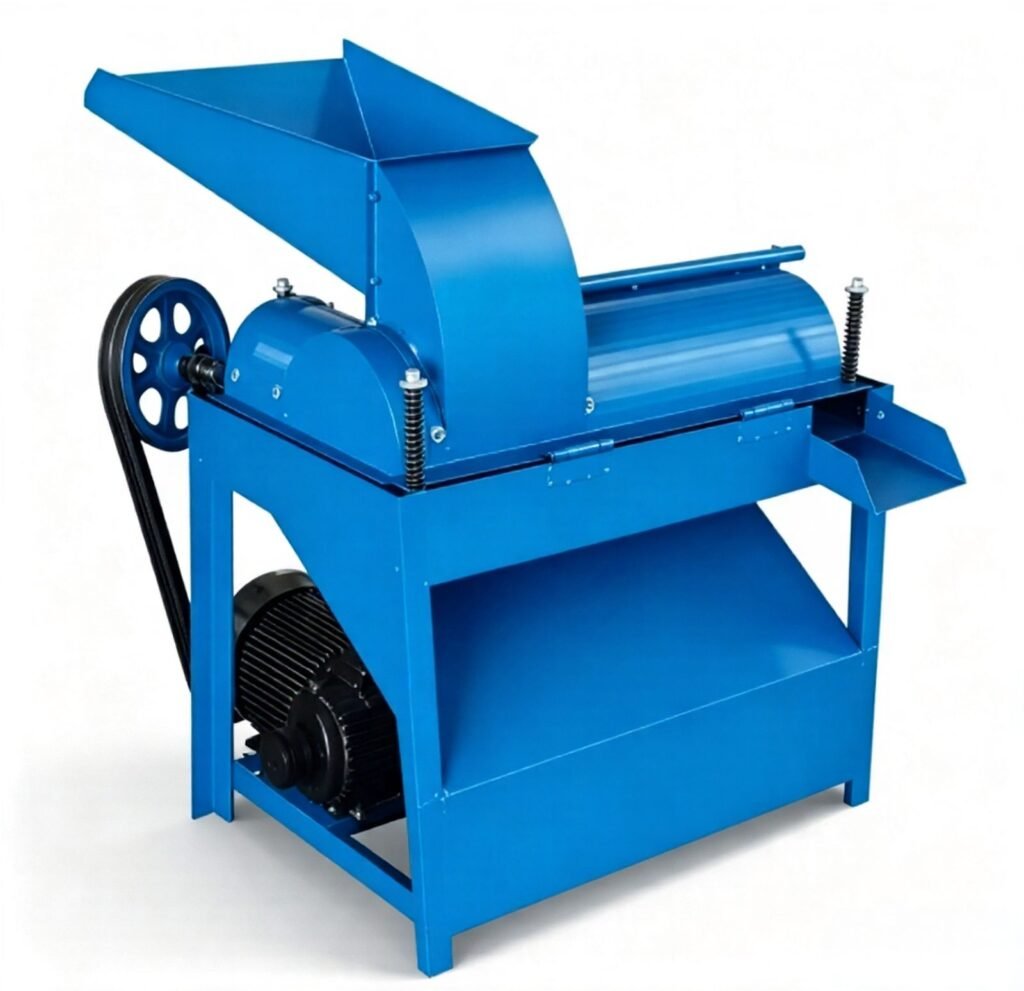
Four models cover this range, and every one has integrated pit separation so husk and debris come off in the same pass:
NS-X121 small — around 150 kg/h, 2.2 kW, 220 V or 380 V, 0.80 CBM packed, net weight around 176 kg. A multi-material peeler for small farms and pilot lines.
NS-X123 medium — 300 kg/h, 3 kW, 220 V or 380 V, 1.00 CBM packed, net weight around 220 kg. Built for medium processing plants.
NS-X122 large — around 500 kg/h, 4 kW, 380 V, 0.80 CBM packed, net weight around 180 kg. Higher throughput with pit separation, for larger facilities.
NS-X124 industrial — 1000 kg/h, 3 kW, 380 V, 2.10 CBM packed, net weight around 360 kg. For continuous industrial lines.
Size the machine to your peak daily harvest, not your season average. Harvest arrives in bursts, and a peeler sized to the average becomes the bottleneck on your busiest days. For the full harvest-to-kernel workflow, see how to improve macadamia kernel recovery. To have a model matched to your tonnage, send us your daily harvest volume. Husking is the step that decides how the shell survives: read green husk peeling: timing, loss rates and settings. For how dehusking capacity sits inside the rest of the line — and what drives the cost of each stage — read what drives the price of a macadamia processing line. Husk and shell are saleable, not just disposable: shells and husks as by-product revenue covers the uses worth costing out and what separation quality has to be. Power supply belongs in the first enquiry: voltage and power requirements for export covers what changes between 220 V and 380 V, 50 Hz and 60 Hz, and what to measure at your site. Not sure which machine to buy first? small-scale nut processing equipment sets out the throughput bands, the stage to buy first and the power supply limit.
Compare the four macadamia green husk peeler models
Published ratings for the four dehusking models, smallest to largest. Packed volume is the number your freight forwarder needs; power supply is the number your electrician needs.
NS-X121 small — around 150 kg/h, 2.2 kW, 220 V or 380 V. NS-X123 medium — 300 kg/h, 3 kW, 220 V or 380 V. NS-X122 large — around 500 kg/h, 4 kW, 380 V. NS-X124 industrial — 1000 kg/h, 3 kW, 380 V.
These are our published ratings. Real output moves with nut size, husk condition and how evenly the machine is fed, so treat the rating as the top of the range rather than a guaranteed figure.
Which green husk peeler do you need?
Work from your peak daily harvest, then check three things before ordering.
Peak daily tonnage. Harvest arrives in bursts. A machine sized to your season average becomes the bottleneck in your busiest week, and a machine sized far above your peak sits idle for most of the season.
Power supply at the shed. The small and medium models are offered in 220 V or 380 V; the large and industrial models are 380 V. If your site is single phase, that decision comes before the model choice.
How the husk leaves the site. Integrated pit separation sends husk and debris out in the same pass, but the husk still has to be collected and moved. Decide its destination before the machine arrives.
If you are weighing a machine against a manual crew, the decision rests on the labour replaced rather than on the hourly rating. The method is set out in calculating the payback period before you buy.
Frequently asked questions
How soon after harvest should macadamia be dehusked?
Within 24 hours of harvest is the working rule, and never beyond 48 hours. Husk left on the nut in a heap keeps respiring, heats up and pushes moisture back through the shell into the kernel. Once that has happened, kernel damage at cracking rises and whole-kernel recovery falls, which shows up as lost revenue later in the line rather than as an obvious fault.
How much does a macadamia green husk peeler cost?
We do not publish a price list, because the delivered cost depends on the model, the configuration, the voltage and phase you need, and the freight and import charges into your country. What we do publish is the specification — output, power, packed volume and weight — so you can build a comparable in-place cost for each option before deciding. Send your peak daily volume and site power supply for a configuration-matched quotation.
Can a green husk peeler run on 220 V single phase?
The NS-X121 small and NS-X123 medium models are offered in 220 V or 380 V, so a single-phase site can be served by the smaller units. The NS-X122 large and NS-X124 industrial models are 380 V. Tell us what your site actually supplies — voltage, phase and frequency — and the machine is configured for it rather than adapted afterwards.
What is the difference between a green husk peeler and a nut cracker?
The green husk peeler removes the wet outer husk immediately after harvest, before drying. The nut cracker or shelling machine works much later, on dried nut in shell, to open the hard shell and release the kernel. They sit at opposite ends of the line and are not interchangeable: the dehusking stage protects the shell so the cracking stage can work without breaking kernels.
Does one dehusking machine cover every farm size?
No. Rated output across the four models runs from about 150 kg/h to 1,000 kg/h, and the right choice is the one that clears your peak daily harvest without sitting idle for the rest of the season. A pilot line, a medium processing plant and a continuous industrial line are three different configurations, and the larger units also carry more weight and packed volume to move and install.
Still deciding between two models? Send us your peak daily volume, nut size and site power supply and we will reply with the configuration that fits, together with its published figures — request a quotation. The full range is listed under nut and coffee processing machines.
Macadamia, cashew, pine nut and coffee are not competing on price but on structure: which nut to process compares the stage that eats labour, the season length, the byproduct and the one quality number that decides each crop.
Showing all 4 results