Macadamia Shelling Machines
Macadamia shelling machines crack the hard shell and separate kernel from shell in one pass. This range has two models: the NS-X221, rated at about 600 kg/h on a 3 kW + 1 kW, 220 V supply, and the NS-X222, a fully automatic stainless-steel line rated at about 200 kg/h. The choice is not “bigger versus smaller”. It is throughput and crop flexibility versus automatic operation and food-grade construction.
NS-X221 vs NS-X222: the differences that matter
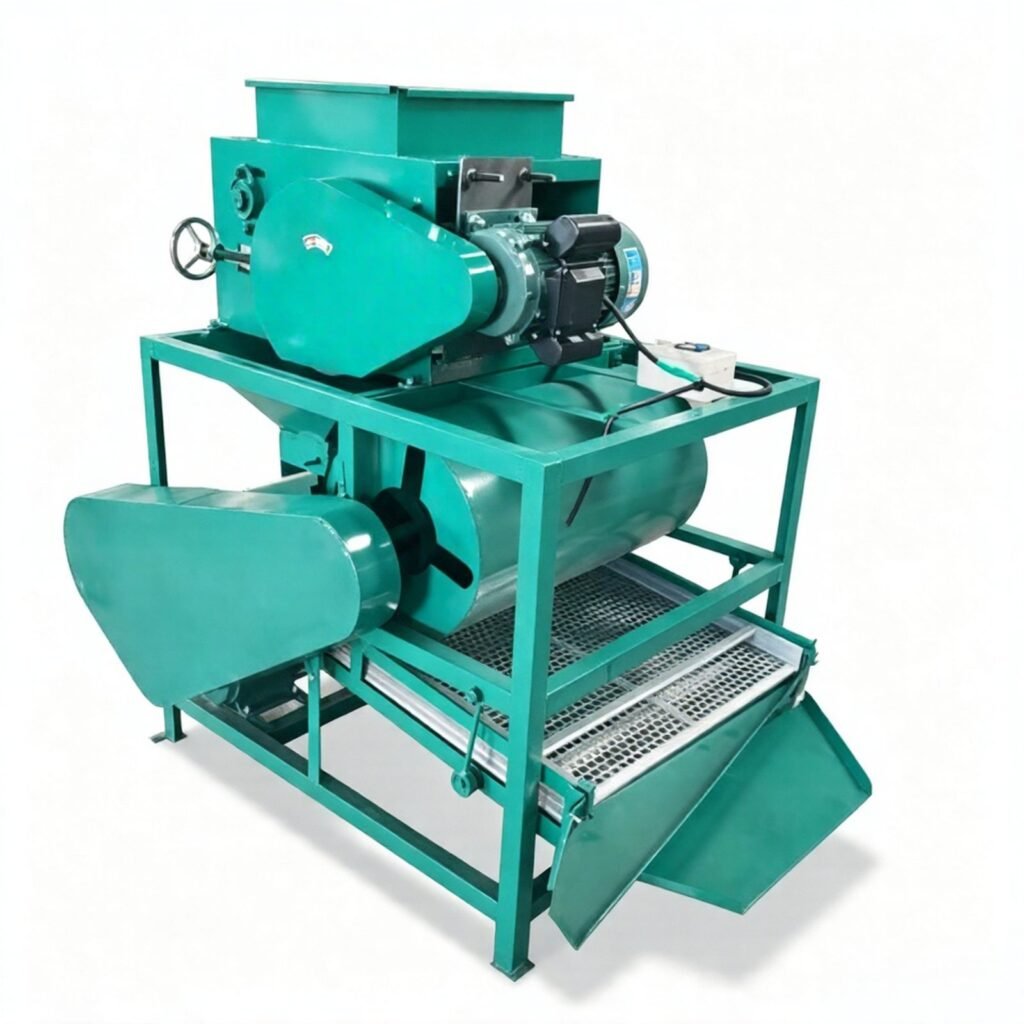
NS-X221 Standard: ~600 kg/h on 3 kW + 1 kW, 220 V
The NS-X221 cracks and extracts kernels in one pass, uses a carbon-steel body and weighs about 250 kg. Best for workshops that need peak throughput and several kernel crops from one machine.
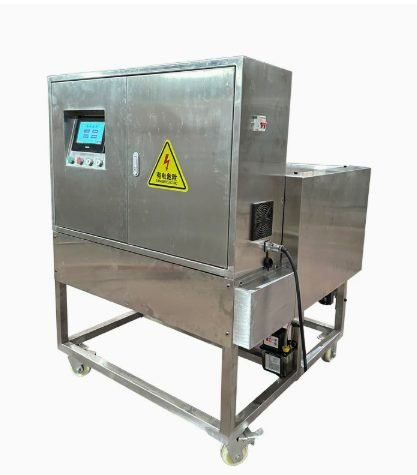
NS-X222 Heavy Duty: ~200 kg/h, automatic stainless line
The NS-X222 runs continuous automatic feeding and discharging in a stainless-steel body and weighs about 390 kg. Best for food-grade plants running continuously, including pecans and macadamia.
Which model fits your line
Start with the constraint, not the capacity number. If the line stops when the sheller operator is called away, or if labour is the cost you are trying to remove, the NS-X222 and its continuous feed are the relevant answer. If your bottleneck is the peak harvest week and you handle macadamia, apricot kernels, cherry kernels or hazelnut on the same machine, the NS-X221 gives more rated output per unit and wider crop coverage.Neither machine fixes a wet batch. Shelling machines assume the nuts have been dried into the range covered in nut in shell moisture content; cracking outside that range raises broken kernels no matter which model is installed. If you are still deciding between two different operations, shelling vs opening machines explains the difference before you buy.
What to send with an enquiry
Six details let us answer with a model, a specification and a packing size instead of a brochure: nut type and variety; peak-day volume in kg/h; in-shell moisture; the whole-kernel share you need to protect; supply voltage and phase; and the destination port. Send them through the enquiry form and we will reply with the model that matches the bottleneck.
Quick comparison: NS-X221 vs NS-X222
NS-X221 Standard — ~600 kg/h, 3 kW + 1 kW, 220 V. Carbon-steel benchtop unit, about 250 kg. Batch operation; one machine can handle macadamia, apricot kernel, cherry kernel, peach kernel, hazelnut and jujube. Packing volume 2.00 CBM.
NS-X222 Heavy Duty — ~200 kg/h, automatic stainless line. Continuous automatic feeding and discharging, about 390 kg, designed for pecans and macadamia. Power supply is configured to your site; confirm voltage and phase at quotation. Packing volume 2.40 CBM.
Choose NS-X221 if: peak harvest throughput and several kernel crops matter more than automation.
Choose NS-X222 if: labour is the bottleneck, the line runs continuously, and stainless construction is required.
Do not choose on kg/h alone: the NS-X221 is faster on paper, while the NS-X222 removes feeding labour.
These are published design ratings, not a guaranteed output for every batch. Real kg/h moves with nut size, shell hardness, moisture and how evenly the machine is fed. The capacity and power chart shows where both models sit against the rest of the range.
What changes the real output
Four variables decide whether a 600 kg/h rating behaves like 600 kg/h on your floor:
Moisture at cracking. Macadamia is normally cracked at about 1.5% nut-in-shell moisture. Wet nuts bend instead of cracking; over-dried nuts shatter. Check moisture before blaming the machine.
Nut size and variety. A batch with a wide size spread needs a different gap setting from a graded batch. The same machine can produce different whole-kernel rates on two farms.
Feed uniformity. A machine fed in surges either runs empty or overloads. Continuous feed is the difference between a rated figure and a repeatable one.
What you count as output. Kernel out, nut-in-shell in, and whole-kernel share are three different numbers. Compare quotes on the same basis.
Frequently asked questions
What is the difference between a macadamia shelling machine and an opening machine?
A shelling machine cracks the shell and separates kernel from shell in one pass. An opening machine scores and splits the shell but does not separate the kernel. If you sell opened nut-in-shell, you need an opening machine; if you sell kernel, you need shelling. The difference is set out in shelling vs opening machines.
How do I choose between the NS-X221 and NS-X222?
Start with the constraint. If peak harvest throughput and several kernel crops matter more than automation, the NS-X221 is the fit. If labour is the bottleneck and the line must run continuously in a food-grade environment, the NS-X222 is the fit. Do not choose on the capacity number alone: the NS-X221 is faster on paper, while the NS-X222 removes feeding labour.
Can the NS-X221 shell nuts other than macadamia?
Yes. The NS-X221 is used on macadamia, apricot kernels, cherry kernels, peach kernels, hazelnut and jujube kernels. The NS-X222 is designed specifically for pecans and macadamia. If you process several crops, say so in the enquiry because it changes the recommended gap setting and configuration.
What moisture should the nuts be before shelling?
For macadamia, the working target is about 1.5% nut-in-shell moisture. Cracking outside the suitable range raises broken kernels regardless of model. The drying method and moisture test are covered in nut in shell moisture content and how to dry macadamia nuts.
What should I send with an enquiry?
Send the nut type and variety, peak-day volume in kg/h, in-shell moisture, the whole-kernel share you need to protect, supply voltage and phase, and the destination port. With those six details we can recommend a model and give a packing size instead of a generic brochure. Use the enquiry form.
Related reading
Kernel losses usually start before the sheller: how to improve macadamia kernel recovery sets out the full sequence. Grading is the cheapest lever after cracking: manual vs machine nut sorting gives the arithmetic. For repeatable settings, use the nut processing machine maintenance checklist, and dry the batch correctly with how to dry macadamia nuts before cracking.
Showing all 2 results