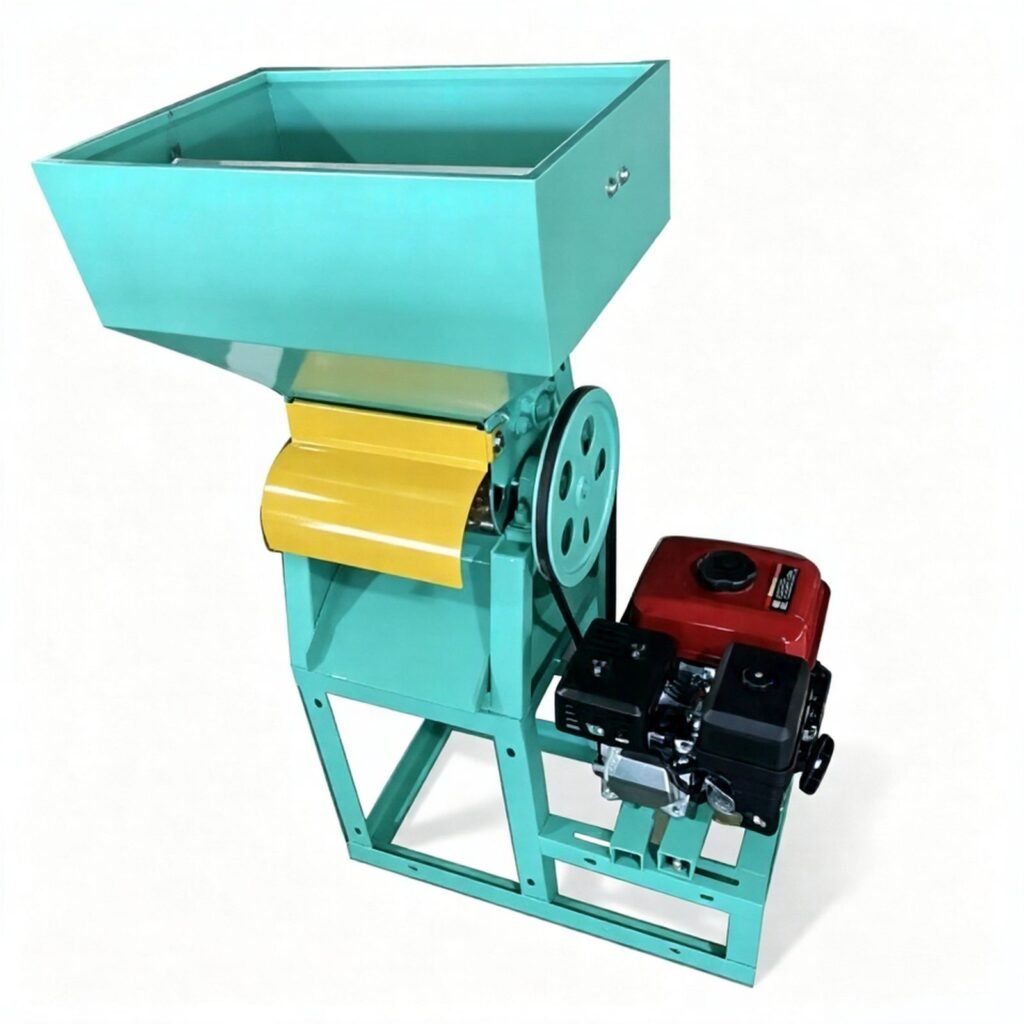
Coffee Fruit Peeling Machines
Coffee fruit peeling machines — pulpers — remove the outer skin and pulp from freshly picked coffee cherries. The job has to happen the same day as picking: cherries left in a heap ferment unevenly, and uneven fermentation produces off-flavours before the beans ever reach the drying bed.
This pulper takes fresh cherry and delivers parchment ready for fermentation and drying. It is sized for smallholder farms and small processing units rather than industrial mills, and it is built for daily use through harvest rather than occasional operation.
When specifying a pulper, work from your daily cherry volume at the busiest point of harvest, and decide up front how pulp and wastewater will be handled alongside the machine. Tell us your daily volume and we will recommend the right unit. Request a quote. See our processing guides and knowledge base for peeling and pulping notes. Not sure what pulping does and does not remove? Read coffee fruit peeling: how pulping sets up everything after it — it works through the pulping gap, same-day pulping and how to size a machine from your own daily cherry volume. On the coffee side of the same problem: coffee pulping: settings and damage control sets out the gap and water adjustments and how to read the defects in both streams. The whole route from cherry to green bean, stage by stage: coffee processing, from pulping to drying and grading covers where each stage sits and which numbers are worth recording per lot. The stages after pulping decide the lot: coffee drying and hulling, from wet parchment to green bean covers the two drying routes, the water-removal maths and when parchment is ready for the huller.
Frequently asked questions
What does a coffee fruit peeling machine do?
It removes the skin and pulp from ripe coffee cherries and leaves wet parchment, which is the starting point for everything that follows: fermentation or mechanical demucilaging, drying and hulling. The pulper setting is what decides how much mucilage is left on the parchment and how much the bean is stressed, so it is the stage that sets the ceiling on cupping quality.
How do I choose the capacity of a coffee pulper?
Size it against your peak harvest day, not your average. Cherries do not wait once they are ripe, so a pulper that is adequate on a normal day becomes the bottleneck on the two or three heaviest days of the season. Work from the weight of cherry you expect to receive on your busiest day, then confirm the machine can process that volume within the hours you actually have available.
What is the difference between pulping and demucilaging?
Pulping removes the skin and pulp mechanically and leaves the mucilage attached to the parchment. Demucilaging removes that mucilage layer, either biologically by fermentation or mechanically in a demucilager. They are separate stages with separate equipment, and the choice between them changes water use, labour and how the lot is controlled.
Can a coffee pulper run on single-phase power?
It depends on the motor fitted and the throughput. Small farm-scale units can run on single-phase supply, while larger machines are normally built for three-phase power because the motor rating exceeds what a single-phase circuit can carry. The supply available on your site should be confirmed before the machine is built, not after it arrives.
What should I check before ordering a coffee pulper?
Confirm four things in writing: the peak-day throughput you need, the supply voltage and phase on site, the pulping gap range and how it is adjusted, and which wear parts are expected to be replaced in normal operation. The last two decide how the machine behaves through a season and how quickly you can get it running again, so they belong in the quotation rather than the after-sales conversation.
A coffee mill is a sequence of separately priced stages, and the picking-day clock decides how much of it you have to buy: what drives the cost of a coffee processing line walks through the water and waste line, the drying area and the quality loss that pays for the mill.
A pulper works wet on fresh cherry on picking day and a huller works on dried parchment weeks later: the difference between a coffee pulper and a coffee huller sets out why the two machines are not interchangeable and what to put in an enquiry.
Showing the single result